News
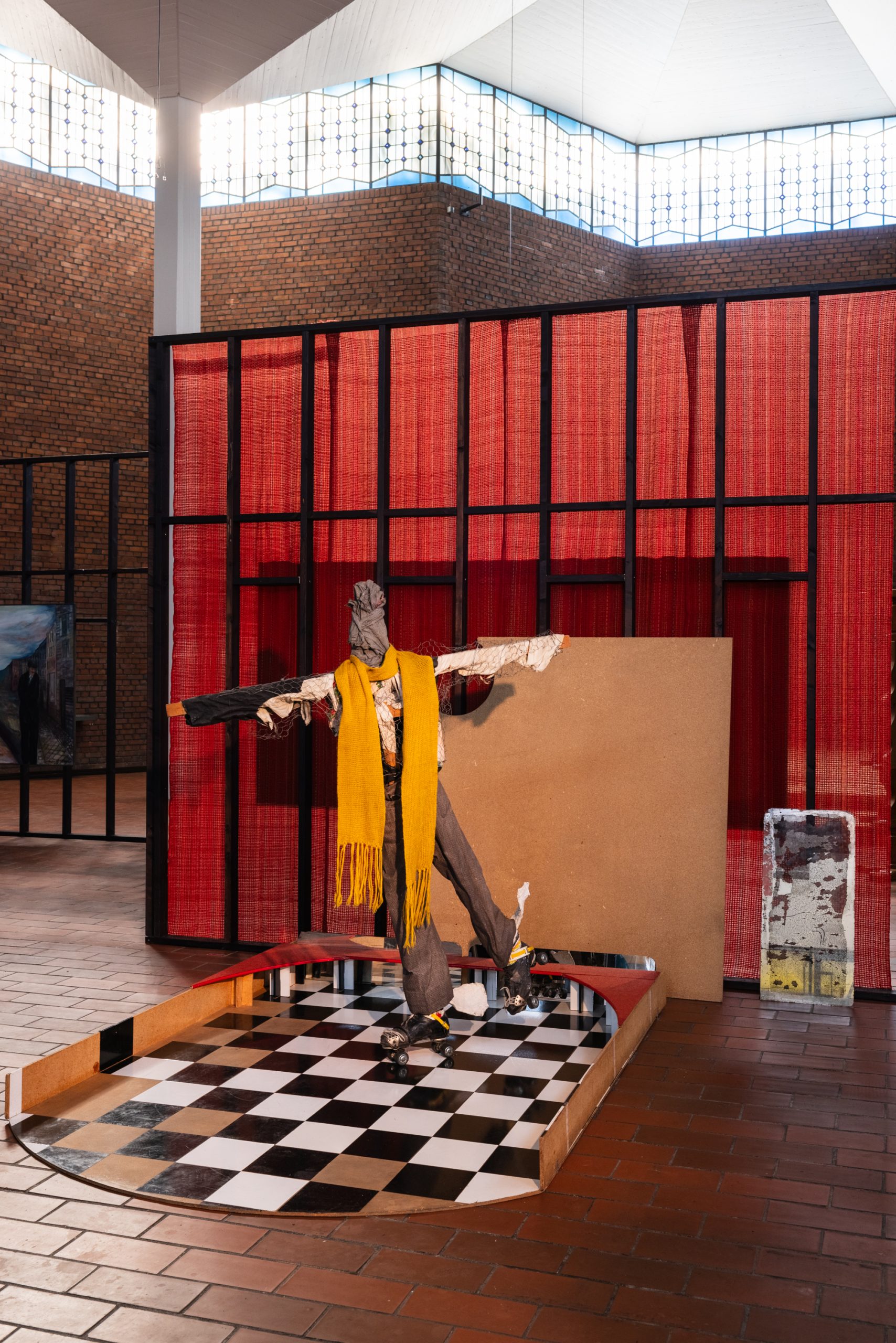
From the early 1960s onward, Vlassis Caniaris developed an artistic practice that made social realities visible through everyday materials and found objects. Rather than relying on illustrative representation, he drew on the inherent force of found things – clothing, tin cans, or toys – which he condensed into politically charged assemblages and environments. Migration appears here not as an abstract theme, but through the material traces of everyday life. Michael Fehr, in conversation with Max Imdahl, has called this strategy “concrete realism” (Konkreter Realismus), an approach in which the work neither stands in for reality through pictorial means nor withdraws from it into pure form, but works with and in reality directly. Material and form become indivisible: the discarded garment or fragment of street debris does not denote something beyond itself, but enters the work as a piece of the very conditions it makes visible. The Skater is among the works included in his now legendary exhibition Gastarbeiter–Fremdarbeiter [Guest Worker–Foreign Worker], which was shown, among other venues, at the Kunstmuseum Bochum from June to July 1975.