News
Farida El Gazzar, Kalos&Klio, Silvina Der Meguerditchian
Why the Caged Bird Sings
Curated by Alexandros Kassandrinos, Niovi Zarampouka-Chatzimanou, Victoria Zygourou
Why the Caged Bird Sings
“It is not our differences that divide us. It is our inability to recognize, accept, and celebrate those differences.” — Audre Lorde
On the occasion of Just Art’s ten years of activity in Athens and in dialogue with the theme “Courage” of Refugee Week 2026, this exhibition draws inspiration from Maya Angelou’s autobiographical work I Know Why the Caged Bird Sings (1969). The song of the caged bird does not negate the cage. It transcends it. It is a voice that persists, a presence that refuses to fall silent. Artists with different histories, different losses, and different relationships to power come together here without sharing the same experiences, but perhaps sharing common gestures: gestures of care, resistance, and exposure.
Memory, Place, Resistance
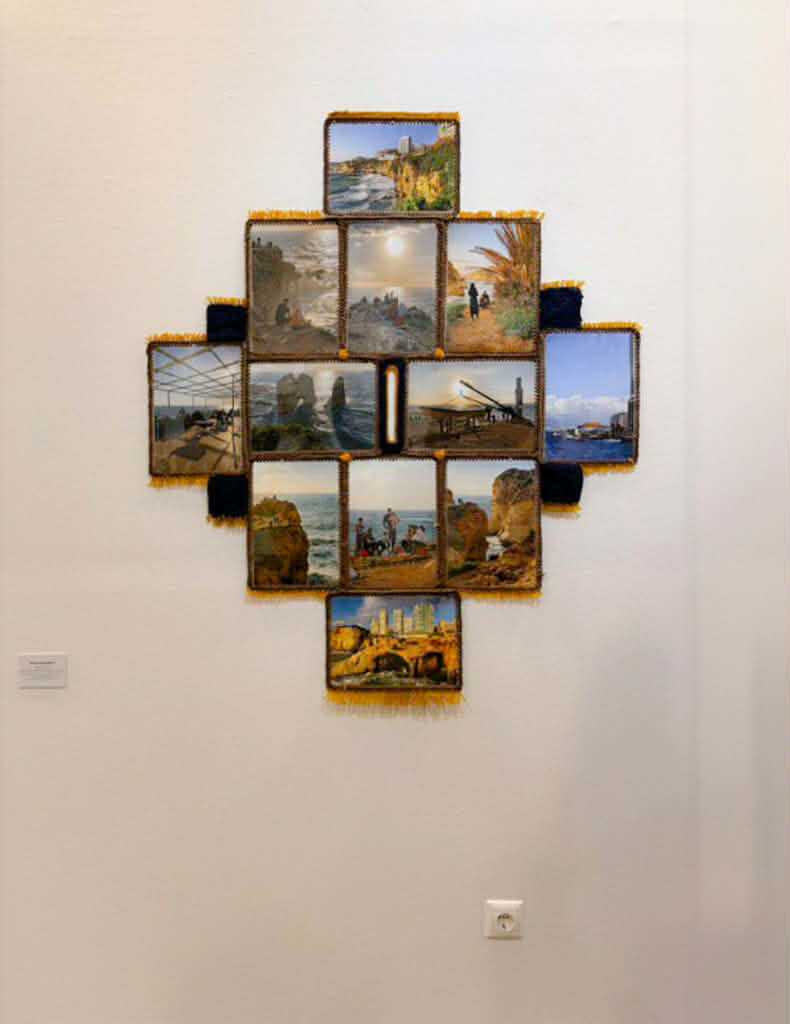
On the walls of the Gallery, two temporalities meet: works from the permanent collection, created during periods of intense oppression, are shown alongside the contemporary practices of artists living and working today. Efi Haliori photographs the same water as both beauty and danger: the sea around Chios and Lesbos in 2015, a place of passage and uncertainty. Silvina Der Meguerditchian weaves. In her series memory-carpets (The Texture of Identity), photographs she took in Beirut, Aleppo, Stepanakert, and Diyarbakır become carpets of memory—tangible monuments to cities that carry history within them. The images in the work Beirut were taken one year before the 2020 explosion. In Dionisis Christofilogiannis frames photographs of migrants arriving in Ellis Island, with handmade bread motifs, offering these unknown people a new, symbolic embrace. Venia Dimitrakopoulou writes a letter that was never meant to be read, but had to be written. A monologue written over months onto paper, without sequence and without stopping. Writing as a bodily act. An act of address.
During her imprisonment on the island of Gyaros under the military Junta, Vaso Katraki painted pebbles with marker and sent them to her family instead of letters, which were subject to censorship. A more immediate, tangible form of communication: a testament to endurance that fits in the palm of a hand. In the series Abandonment (1967–1969), Rika Pana’s painting becomes a cry: stylized figures filled with anguish, struggling to exist within a world of violence. Alongside her, Terpsichore Kyriakou and Julia Andreiadi move in the opposite direction: austerity, silence, waiting, and forms of confinement that are not always visible. Aria Komianou prints a dove emerging violently from darkness. Despina Meimaroglou explores forms that emerge or become trapped, the boundaries between transition and confinement.
Body, Home, Resistance
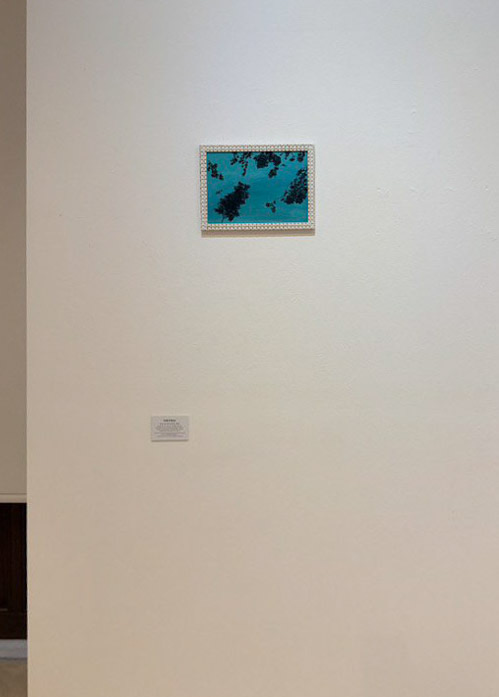
Chloe Akrithaki places a rusted cage beside a velvet album of Polaroids. Photography, she writes, does not preserve, it imprisons. Stella Kapezanou returns to myth. In Briseis, the abduction by Achilles is painted anew. Here, however, Briseis, rendered in vivid red, refuses to surrender. Venia Bechraki transforms an ordinary, almost invisible domestic act into an act of presence. Through humour, exaggeration, and staged performances, she uses the kitchen as a space for negotiating identity, power, and freedom. In her two works, Farida El Gazzar looks toward the sky and asks whether constraint is what compels us to imagine freedom. She also invites us to approach the next steps in shaping the future with greater care and foresight. A wedding photograph. Two strangers, bound together. Kanella Arapoglou embroiders tears onto the woman’s face as tears overflow the paper. The needle, traditionally associated with women’s craft, becomes the only outlet when no other language remains. Working with similar materials but in a different register, Doreida Xhogu paints mops, buckets, and cleaning gloves on discarded bathroom tiles. The invisible labour of care is elevated into a contemporary still life.
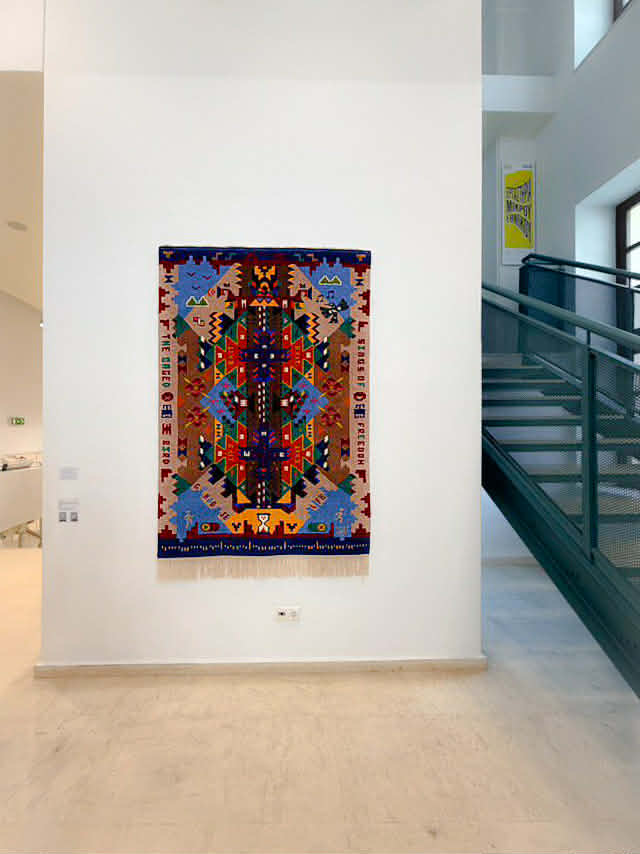
This exhibition does not propose a definition of courage. It proposes a space where courage, in all its forms and with all its inequalities, becomes visible. It concludes with the words of Malcolm X, encoded in Morse code within the work by Kalos & Klio, encountered both at the beginning and at the end of the exhibition: “Nobody can give you freedom.”
Participating Artists
Chloe Akrithaki · Julia Andreiadi · Kanella Arapoglou · Venia Bechraki · Dionisis Christofilogiannis · Silvina Der Meguerditchian · Venia Dimitrakopoulou · Farida El Gazzar · Efi Haliori · Stella Kapezanou · Vaso Katraki · Aria Komianou · Terpsichore Kyriakou · Kalos & Klio · Despina Meimaroglou · Rika Pana · Doreida Xhogu